Does Archaeology Confirm the Bible? The Strongest Archaeological Evidence for Biblical History
Short Answer
Yes. Archaeology has uncovered a substantial body of evidence confirming that the Bible is rooted in the real history, geography, rulers, peoples, cities and customs of the ancient Near East and first-century Palestine. Inscriptions outside the Bible refer to Israel, the House of David, King Mesha of Moab, King Hezekiah of Judah, Pontius Pilate and other persons or political settings described in Scripture. Excavations have also uncovered places described with striking specificity in the Gospels, including the Pool of Bethesda and structures associated with the Pool of Siloam. None of these discoveries by itself proves that every event recorded in Scripture occurred, still less that a particular miracle occurred. Taken cumulatively, however, they make it increasingly difficult to dismiss the Bible as a collection of legends written without genuine knowledge of the historical world it describes.
Some discoveries are particularly striking. The Tel Dan Stele contains the earliest generally accepted extrabiblical reference to the “House of David.” The Sennacherib Prism names Hezekiah and records the Assyrian campaign against Judah, while enormous Assyrian palace reliefs depict Sennacherib's capture of Lachish, an event also described in Scripture. Hezekiah's water tunnel itself survives beneath Jerusalem and has been scientifically dated to the appropriate period. In the New Testament world, an inscription bearing Pontius Pilate's name, an ossuary widely associated with the high priest Caiaphas, and archaeology at Bethesda provide physical points of contact with persons and places in the Passion and Gospel narratives. (The Jewish Museum)
The Shroud of Turin deserves consideration as a separate and extraordinary category of material evidence. Scientific investigation has established that it is a real linen textile bearing front-and-back images of a crucified man and that blood is present in wound areas. Its image has unusual chemical and spatial characteristics that are not adequately described as an ordinary painting. Whether it is actually the burial cloth of Jesus Christ remains disputed, above all because radiocarbon tests in 1988 gave a medieval date. Subsequent statistical work has challenged aspects of those tests, while a 2026 examination of surviving radiocarbon sample fragments found them consistent with the main Shroud and found no evidence of contamination. The Shroud therefore cannot responsibly be presented as scientifically proven to be Christ's burial cloth—but neither should its remarkable physical characteristics be dismissed without serious examination. (ScienceDirect)
Why This Question Matters
Christianity makes historical claims. It does not merely propose an abstract philosophy or a private spiritual experience. Scripture says that God acted within human history: Abraham lived, Israel existed, David ruled, Jerusalem was besieged, Christ was born during identifiable political circumstances, Pontius Pilate governed Judaea, Jesus was crucified, and His disciples claimed that He rose bodily from the dead.
St Luke explicitly presents his Gospel as an investigated historical account. He says that he wrote after having “diligently attained to all things from the beginning” so that Theophilus might “know the verity” of what he had been taught (Luke 1:1–4, Douay-Rheims).
If the biblical authors repeatedly invented kings, cities, government officials and geographical features that archaeology subsequently showed never existed, confidence in their historical reliability would be seriously damaged. Conversely, when archaeology repeatedly places the writers in the correct historical environment—sometimes confirming obscure details unknown outside Scripture for centuries—that does not automatically prove divine inspiration, but it is important evidence for the Bible's credibility as an historical witness.
The Catholic Church has never taught that Christian faith rests upon archaeology. Divine faith ultimately rests upon the authority of God revealing. But the Church has also strongly defended the historical character of Scripture and encouraged serious investigation of the ancient world.
What the Catholic Church Teaches
Sacred Scripture Is Not Myth Disguised as History
Catholic doctrine holds that the canonical books of Scripture were written under divine inspiration and have God as their principal Author. Pope Pius XII, summarising the teaching of Trent, Vatican I and Leo XIII, taught in Divino Afflante Spiritu that the inspired books are sacred precisely because they were written under the inspiration of the Holy Ghost and handed down to the Church as such. He rejected attempts to restrict biblical truth merely to explicitly religious propositions while conceding error in historical matters. (Vatican)
This does not mean that every biblical passage must be interpreted according to a modern journalistic or scientific literary form. Poetry must be read as poetry, parable as parable, prophecy as prophecy, and ancient historical writing according to the conventions of its time. Pius XII specifically instructed Catholic exegetes to use archaeology, history, philology and knowledge of ancient literary forms to determine what the sacred writers actually intended to assert. (Vatican)
Archaeology Is a Legitimate Aid to Understanding Scripture
Pope Leo XIII's Providentissimus Deus is remarkably relevant. When defending Scripture against rationalist attacks, Leo XIII wrote that the credibility of the sacred records should first be vindicated “at least as human documents”, because from their primitive and authentic testimony the mission and divinity of Christ and the institution of His Church can then be considered. He therefore insisted upon careful historical investigation. (Vatican)
Pius XII went still further in 1943. He instructed biblical scholars not to neglect discoveries in “archaeology or in ancient history or literature” that shed light upon ancient authors and their methods of narration. He observed that archaeological discoveries had already contributed materially to answering objections once raised against the antiquity, integrity and historical value of Scripture. (Vatican)
Archaeology therefore occupies an appropriate but limited place in Catholic apologetics. It can corroborate names, places, political circumstances, chronology, architecture and cultural practices. It cannot put the supernatural under a laboratory microscope.
Historical and Archaeological Evidence
1. The Merneptah Stele: Israel Already Known in Ancient Canaan
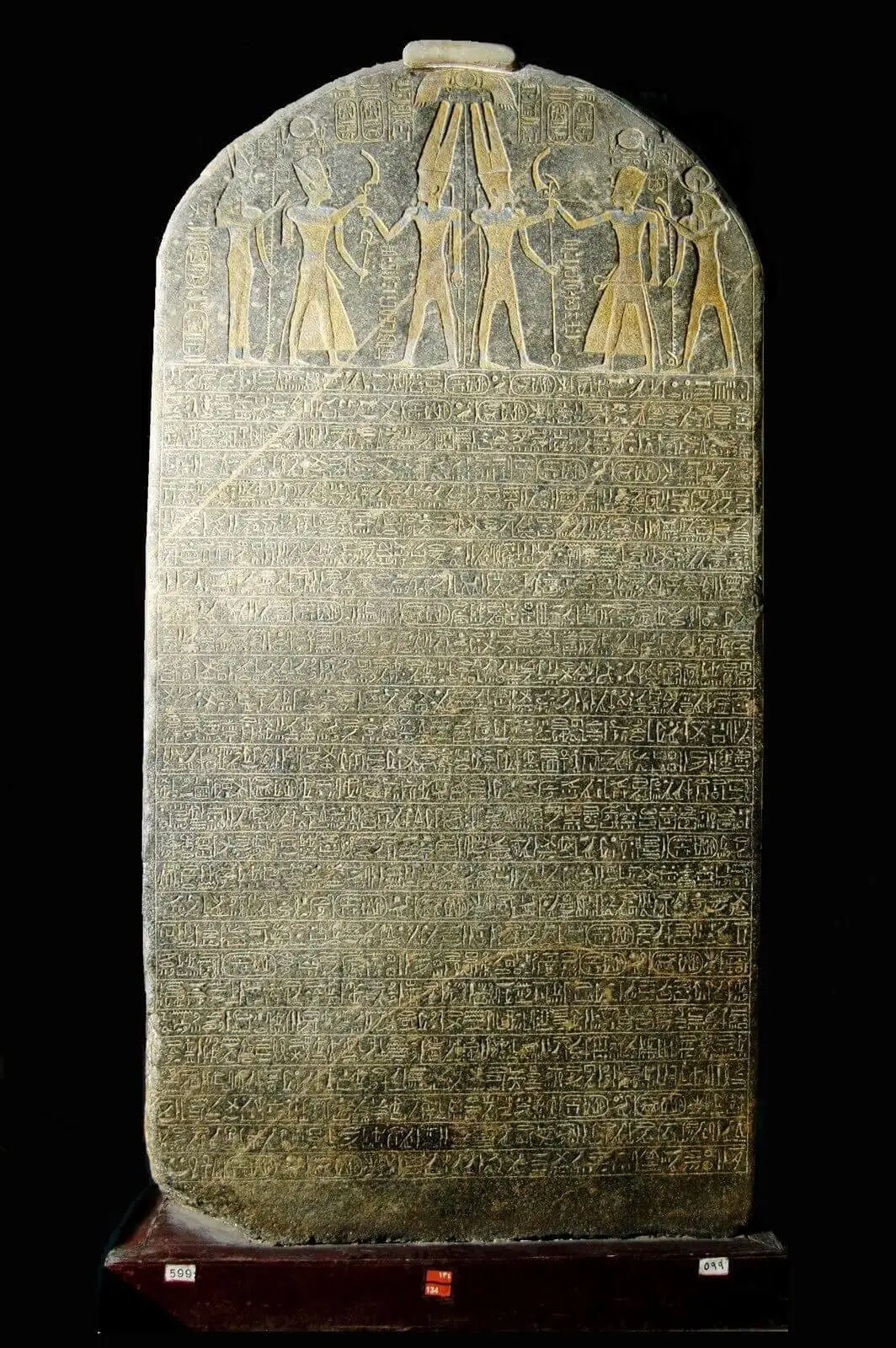
The Merneptah Stele, also known as the Israel Stele or the Victory Stele of Merneptah
One of the earliest important pieces of evidence is the Merneptah Stele, an Egyptian royal monument generally dated to about 1208 BC.
The inscription recounts Pharaoh Merneptah's victories and includes a reference generally translated as Israel. It is widely regarded as the earliest presently known extrabiblical reference to a people called Israel. Significantly, the Egyptian determinative indicates a people rather than an established city-state. (Museum of the Bible)
This does not prove the Exodus, nor does it settle every chronological question about Israel's emergence. It establishes something narrower but important: by the late thirteenth century BC, an Egyptian royal inscription recognised a people called Israel in Canaan.
That is an independent Egyptian witness to the historical existence of biblical Israel at a very early date.
2. The Tel Dan Stele: The “House of David”
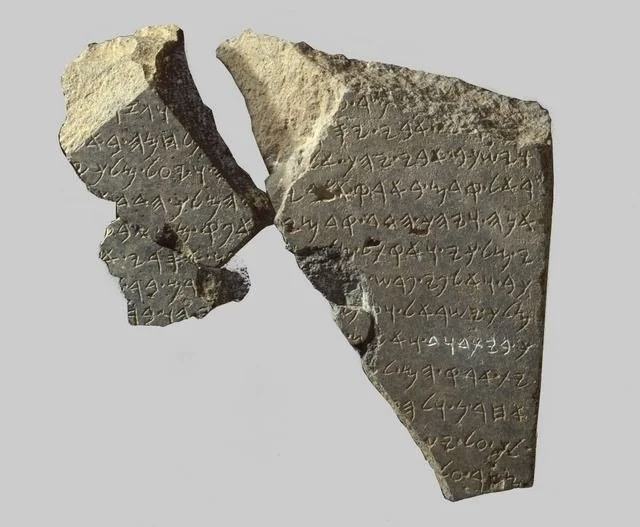
The fragmentary Tel Dan stela, containing the Tel Dan inscription (or “House of David” inscription)
For many years some minimalist reconstructions of Israel's history questioned whether David was an historical king at all or whether he was primarily a later literary creation.
That position became much more difficult after fragments of the Tel Dan Stele were discovered in northern Israel during the 1990s.
The ninth-century BC Aramaic victory inscription contains the expression generally read as the “House of David.” The Jewish Museum, displaying the object on loan from the Israel Museum, describes it as the earliest known mention outside the Hebrew Bible of the royal House of David. (The Jewish Museum)
The importance of the expression is dynastic. Ancient kingdoms could be named after the founder of a ruling house. A ninth-century adversary referring to Judah's monarchy as the “House of David” strongly supports the existence of a remembered Davidic founder.
The stele does not prove every detail recorded about David in Samuel or Kings. But it makes the proposition that David was merely a much later fictional invention considerably less plausible.
3. The Mesha Stele: Moab, Israel and the World of Kings
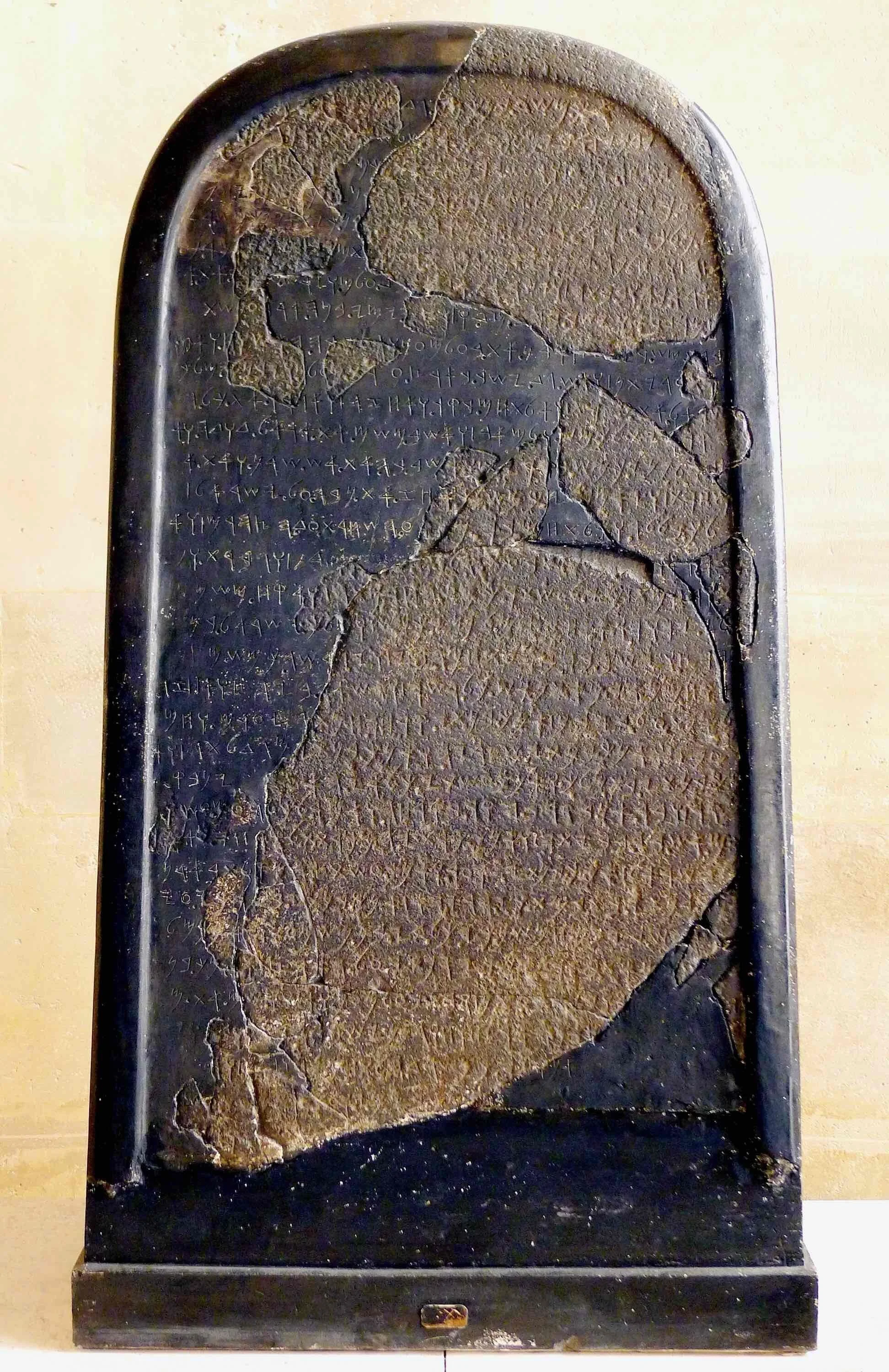
The Mesha Stele, or Moabite Stone
The Mesha Stele, or Moabite Stone, provides another independent witness.
The Louvre dates it to the ninth century BC and identifies it as an historical Moabite inscription erected by King Mesha. Its thirty-four surviving lines describe Mesha's recovery of Moabite territories from Israel. The inscription belongs to the same political world described in 2 Kings, where Mesha king of Moab rebels against Israel. (Louvre Collections)
This is particularly valuable because it is not an Israelite document. It presents events from the Moabite king's own religious and political viewpoint.
That is exactly what historians hope to find: independent witnesses from opposing sides of an ancient conflict.
The accounts are not identical in emphasis, nor should we expect royal propaganda from opposing kingdoms to read identically. Yet Mesha, Moab and Israel emerge as historical actors in precisely the period and region described by the biblical narrative.
4. Sennacherib, Hezekiah and the Assyrian Invasion of Judah
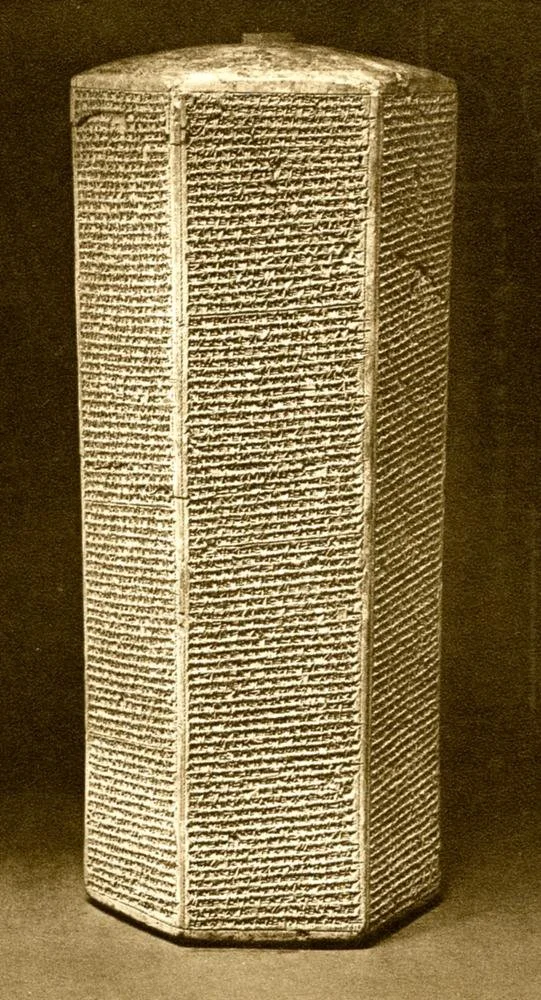
The Taylor Prism
The convergence becomes particularly impressive in the reign of King Hezekiah—or Ezechias in the Bible.
2 Kings 18–19, 2 Chronicles 32 and Isaiah 36–37 describe the Assyrian king Sennacherib's campaign against Judah during Hezekiah's reign.
Sennacherib left his own account.
The Taylor Prism, now in the British Museum, is a six-sided clay prism containing Sennacherib's royal annals. The museum describes the text as including his campaign of 701 BC and the tribute received from “Hezekiah, King of Judah.” (British Museum)
This gives independent Assyrian evidence for:
Hezekiah as king of Judah;
Sennacherib as the Assyrian aggressor;
the Assyrian campaign in Judah;
Hezekiah's resistance and subsequent tribute.
There is another intriguing feature. Sennacherib boasts extensively of his successes and of trapping Hezekiah in Jerusalem, yet his surviving account does not claim that he captured Jerusalem itself.
Scripture likewise records the devastation of Judah but not the Assyrian capture of Jerusalem.
Silence alone cannot prove the biblical account of Jerusalem's deliverance. Nevertheless, the convergence is noteworthy.
5. The Lachish Reliefs: A Biblical War Carved in Stone
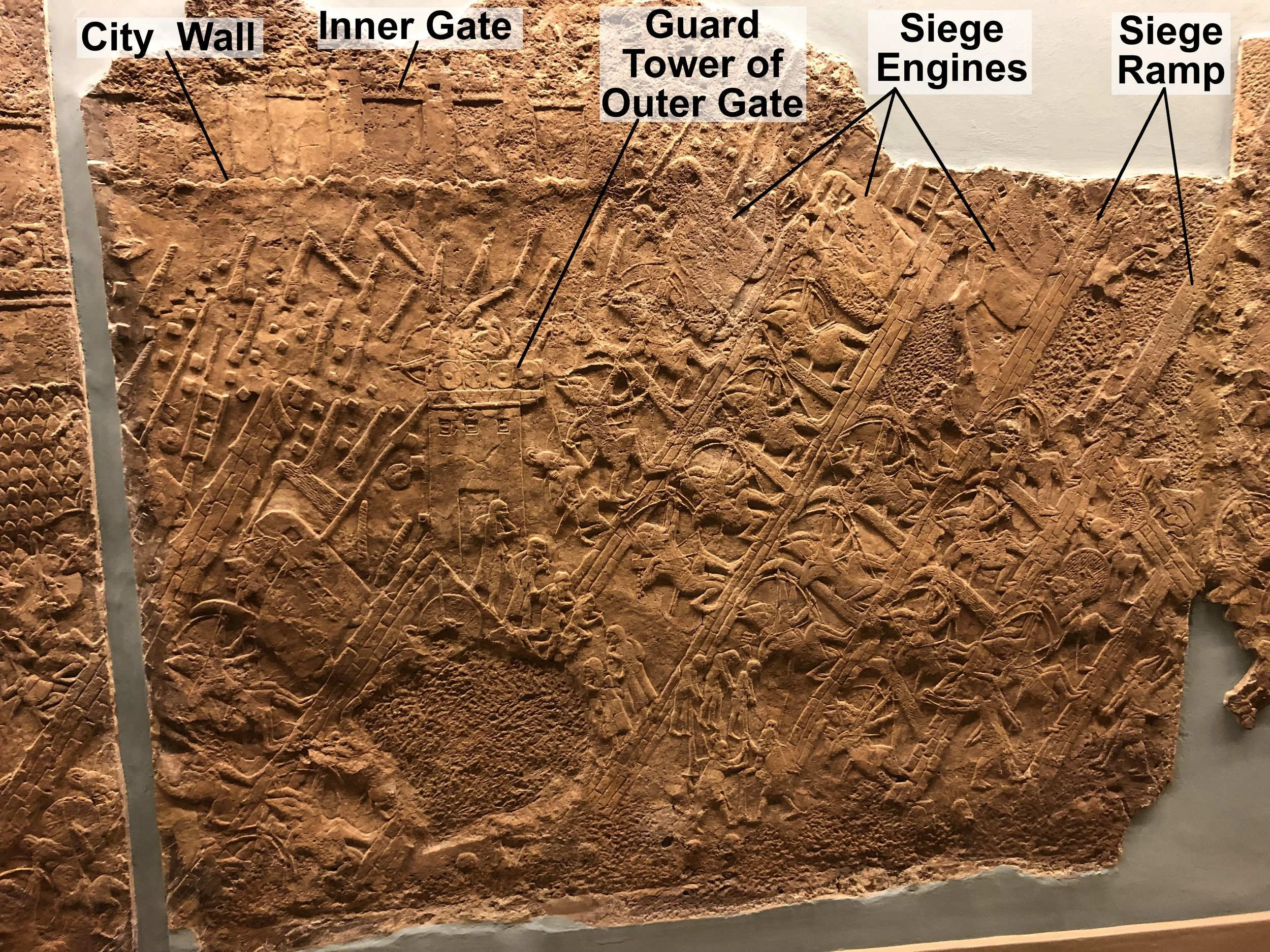
The Lachish Reliefs
The Assyrian evidence does not end with written tablets.
Sennacherib decorated his palace at Nineveh with enormous stone reliefs depicting his successful siege of Lachish, one of Judah's principal fortified cities.
The British Museum identifies these reliefs as representing Sennacherib's capture of Lachish in 701 BC and explicitly notes that the siege is mentioned in the Bible. The sculptures show siege ramps, Assyrian soldiers, prisoners, booty and deported Judaean families. (British Museum)
2 Kings 18:13–14 describes Sennacherib attacking the fortified cities of Judah and places him at Lachish.
Here the Bible's world can almost literally be seen carved into the walls of Sennacherib's palace.
6. Hezekiah's Tunnel: The Biblical Engineering Work Still Exists
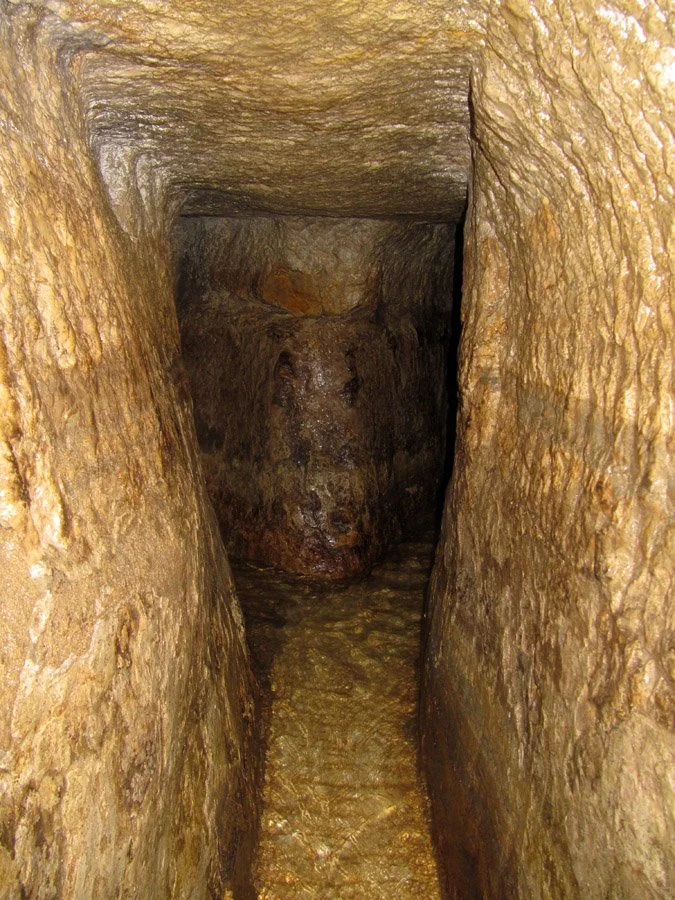
Hezekiah's Tunnel
Scripture also credits Hezekiah with protecting Jerusalem's water supply.
2 Kings 20:20 speaks of how Ezechias
“made a pool, and a conduit, and brought waters into the city.”
2 Chronicles 32:30 says that he diverted the waters of Gihon toward the City of David. (Bible Hub)
A 533-metre water tunnel still runs beneath ancient Jerusalem.
In 2003, Amos Frumkin, Aryeh Shimron and Jeff Rosenbaum published radiometric dating of the tunnel in Nature. Their work placed its construction in approximately the appropriate historical period around 700 BC. Nature itself summarised the result under the heading “Radio-dating backs up biblical text.” (Nature)
This is unusually tangible evidence. The Bible records a major Judaean royal engineering project involving Jerusalem's water supply; the engineering work survives; and scientific dating places it in the relevant era.
7. Pontius Pilate: The Governor Who Judged Christ
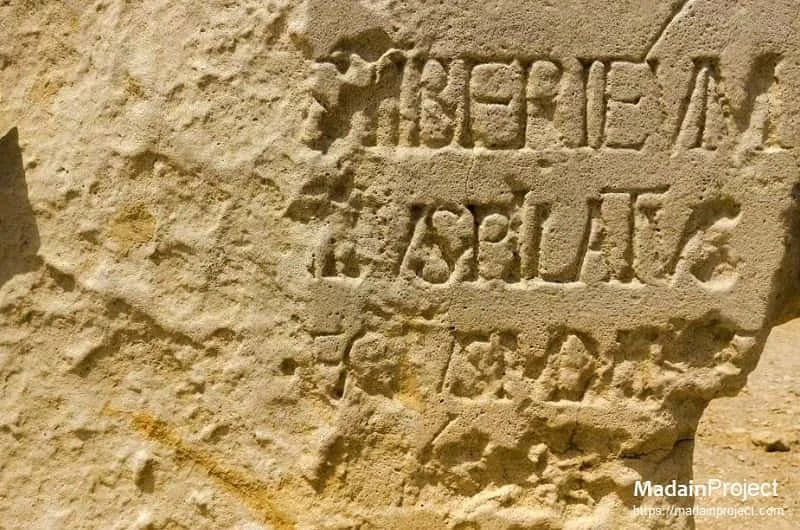
Pilate stone or Pilate Inscription Stone is a carved limestone bearing the name of Pontius Pilate the Roman prefect of Judean province during 26–36 AD. It was discovered at the archaeological site of Caesarea Maritima in 1961.
We now move from the Old Testament into the world of the Gospels.
All four Gospels place the condemnation of Jesus under Pontius Pilate.
In 1961, an inscribed limestone block was discovered at Caesarea Maritima. The surviving Latin inscription includes the name Pontius Pilatus and his title praefectus Iudaeae—Prefect of Judaea.
The Israel Museum describes the Pilate inscription as one of the outstanding archaeological objects from the world of early Christianity and as physical testimony to the Roman governor known from the New Testament. (IMJ)
Archaeology cannot tell us from this stone what Pilate said to Jesus. But it gives us the name and governmental office of the very Roman official around whom the Gospel Passion narratives revolve.
8. Caiaphas: The High Priest of the Passion Narratives
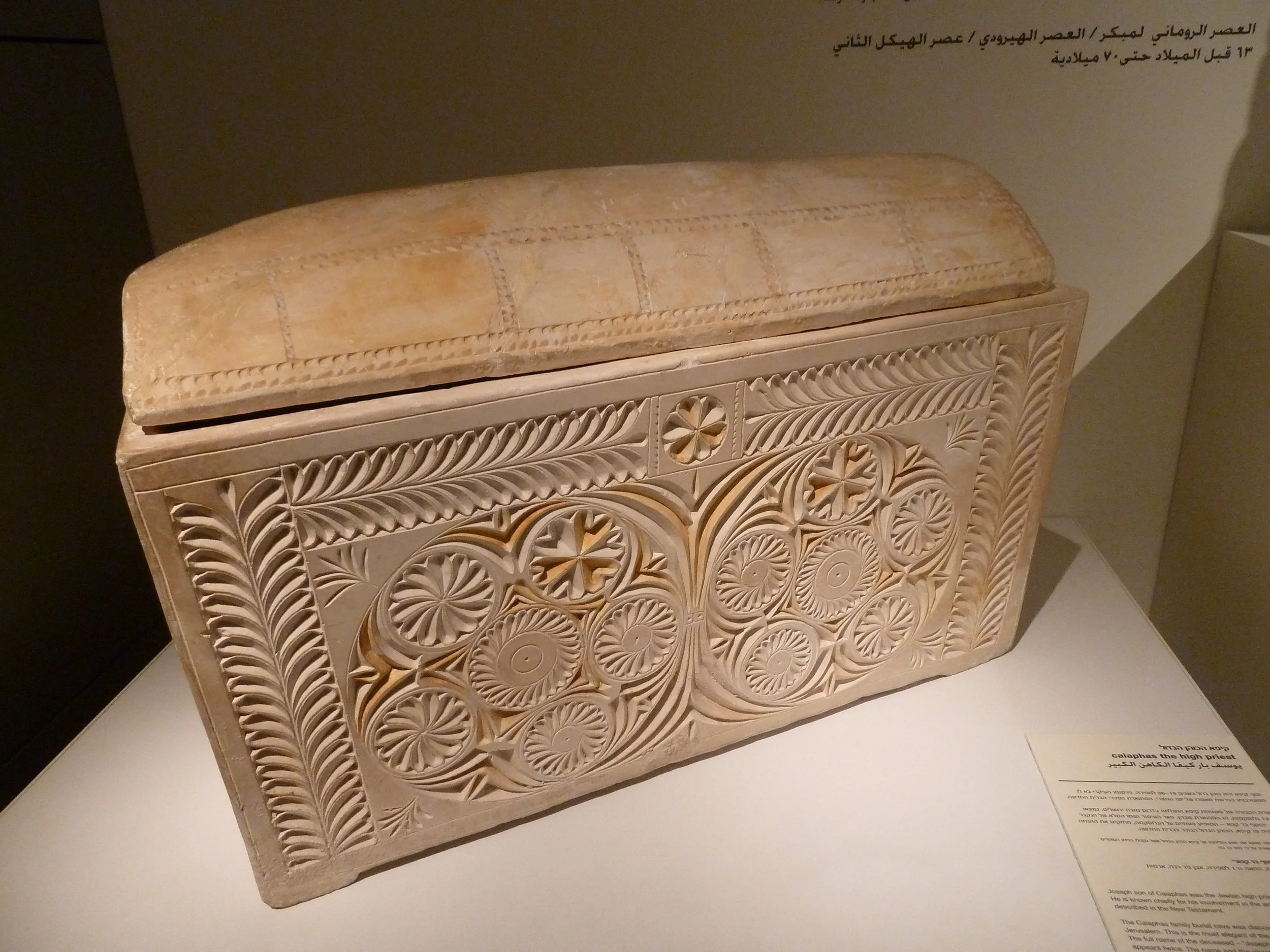
The Caiaphas ossuary is one of twelve ossuaries or bone boxes, discovered in a burial cave in south Jerusalem in December 1990, two of which featured the name "Caiaphas"
The same Israel Museum exhibition displayed an ornate first-century ossuary—an ancient Jewish bone box—bearing the name associated with Joseph Caiaphas.
The museum identifies it with Caiaphas, the high priest whom the New Testament associates with the proceedings against Christ before He was handed over to the Roman authorities. (IMJ)
The identification is widely accepted, although archaeology should not make us more certain than the evidence warrants. An inscription bearing the appropriate name within a wealthy priestly burial context is powerful evidence; identifying the occupant with the Gospel high priest is an historical conclusion rather than an inscription reading “the Caiaphas who tried Jesus.”
Even with that qualification, the combination is striking:
Caiaphas on the Jewish side of the Passion narrative; Pilate on the Roman side.
Both belong to the recoverable archaeological world of first-century Judaea.
9. The Pool of Bethesda and St John's Remarkable Topography
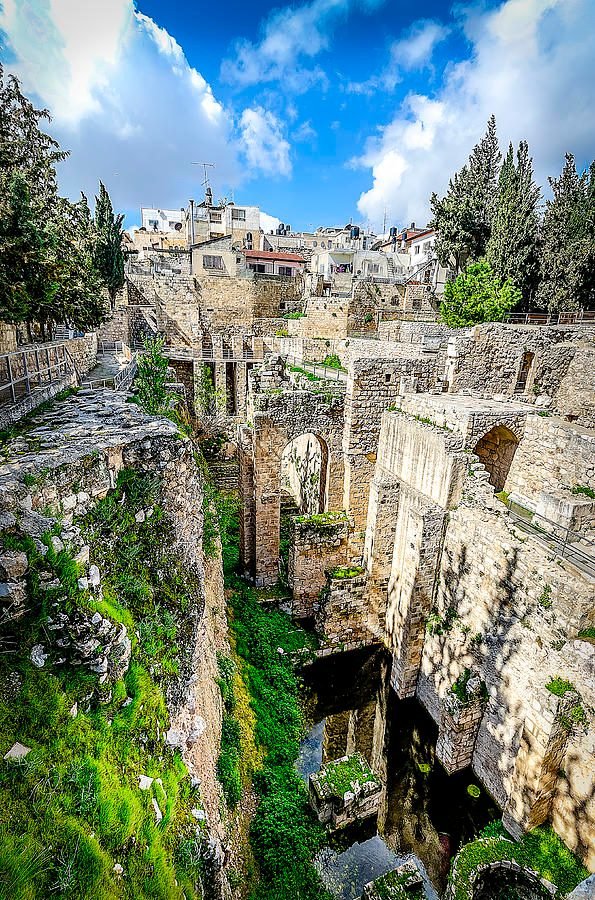
The Pool of Bethesda
John 5:2 describes a pool in Jerusalem with five porticoes.
For a long time this sounded architecturally peculiar. Why would a rectangular pool have five colonnades? Archaeology supplied the answer.
The Bethesda/Bethzatha complex consisted of two adjacent pools separated by a central dam. Four porticoes could surround the outside of the complex while a fifth ran along the central division.
A detailed 2025 study in New Testament Studies discusses the archaeological layout as a double pool surrounded by four porticoes with a fifth running across the dividing dam. The author argues that John's remarkably precise topographical knowledge may even have implications for the date of the Gospel. (Cambridge University Press)
Once again, archaeology cannot demonstrate that the healing recorded in John 5 occurred.
What it can show is that the Evangelist knew a very particular feature of Jerusalem's pre-destruction architecture. That is significant historical evidence.
10. The Pool of Siloam
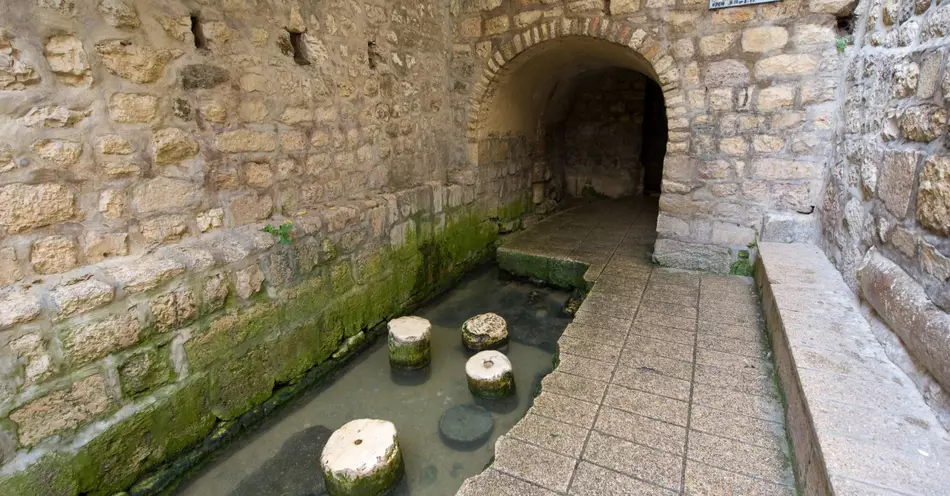
The Pool of Siloam
John 9 records Christ sending the man born blind to wash in the Pool of Siloam.
In 2004, archaeologists Ronny Reich and Eli Shukron uncovered part of a monumental stepped pool dating from the late Second Temple period near the City of David. Their excavation and subsequent scholarship established the existence of an impressive first-century water complex in precisely the relevant area. (De Gruyter Brill)
The exact identification of the newly excavated monumental pool with the specific Siloam pool meant in John remains debated; recent scholarship has proposed an alternative nearby identification. (Biblical Archaeology Society)
That qualification is important. Archaeology is strongest when we state exactly what has been discovered rather than turning a plausible identification into a certainty.
Nevertheless, the archaeological evidence confirms that John's Jerusalem is filled with real and identifiable water installations, roads and ritual structures belonging to the correct period.
11. Archaeological Evidence for Roman Crucifixion and Burial
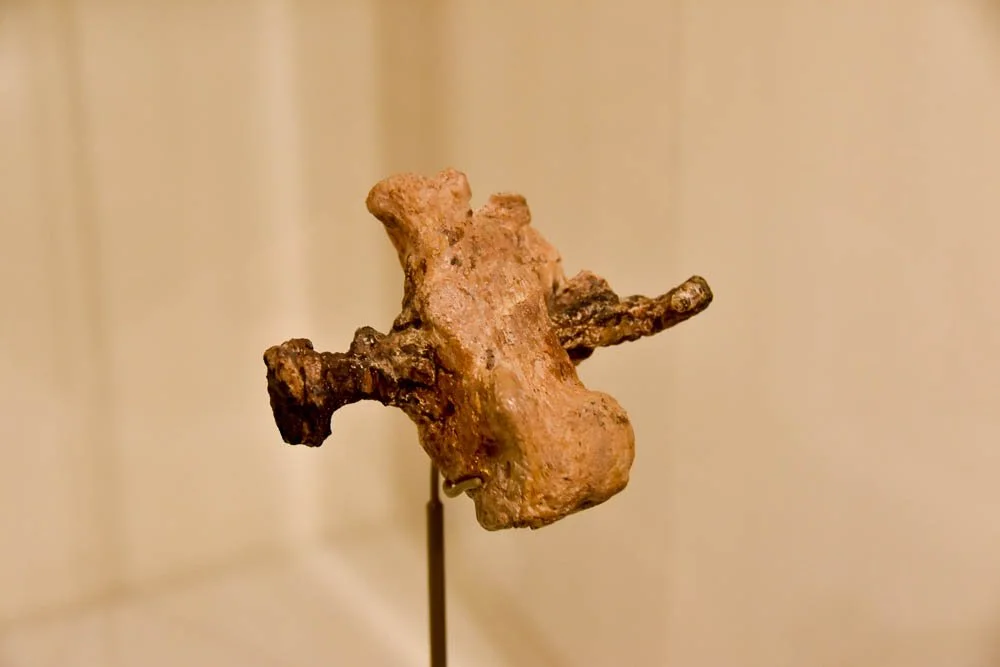
Yehohanan’s Heel Bone with iron nail
A frequent modern claim is that Gospel descriptions of crucifixion or the burial of an executed man are inherently implausible. Archaeology has provided a particularly vivid counterexample.
At Giv'at ha-Mivtar near Jerusalem, archaeologists discovered the remains of a first-century Jewish man often called Yehohanan, whose heel bone was still transfixed by an iron nail. The find gives direct archaeological evidence of Roman crucifixion in Judaea during the general period of Jesus. Later reassessment modified some details of the original reconstruction but confirmed the crucial fact of crucifixion. (JSTOR)
The remains had also received Jewish burial.
This does not prove Jesus' crucifixion or burial; Roman literary and early Christian historical evidence provides the direct case for that. Archaeologically, however, it confirms that crucifixion occurred in first-century Judaea and that at least some crucified persons could subsequently receive burial.
12. The Dead Sea Scrolls and the Transmission of Scripture
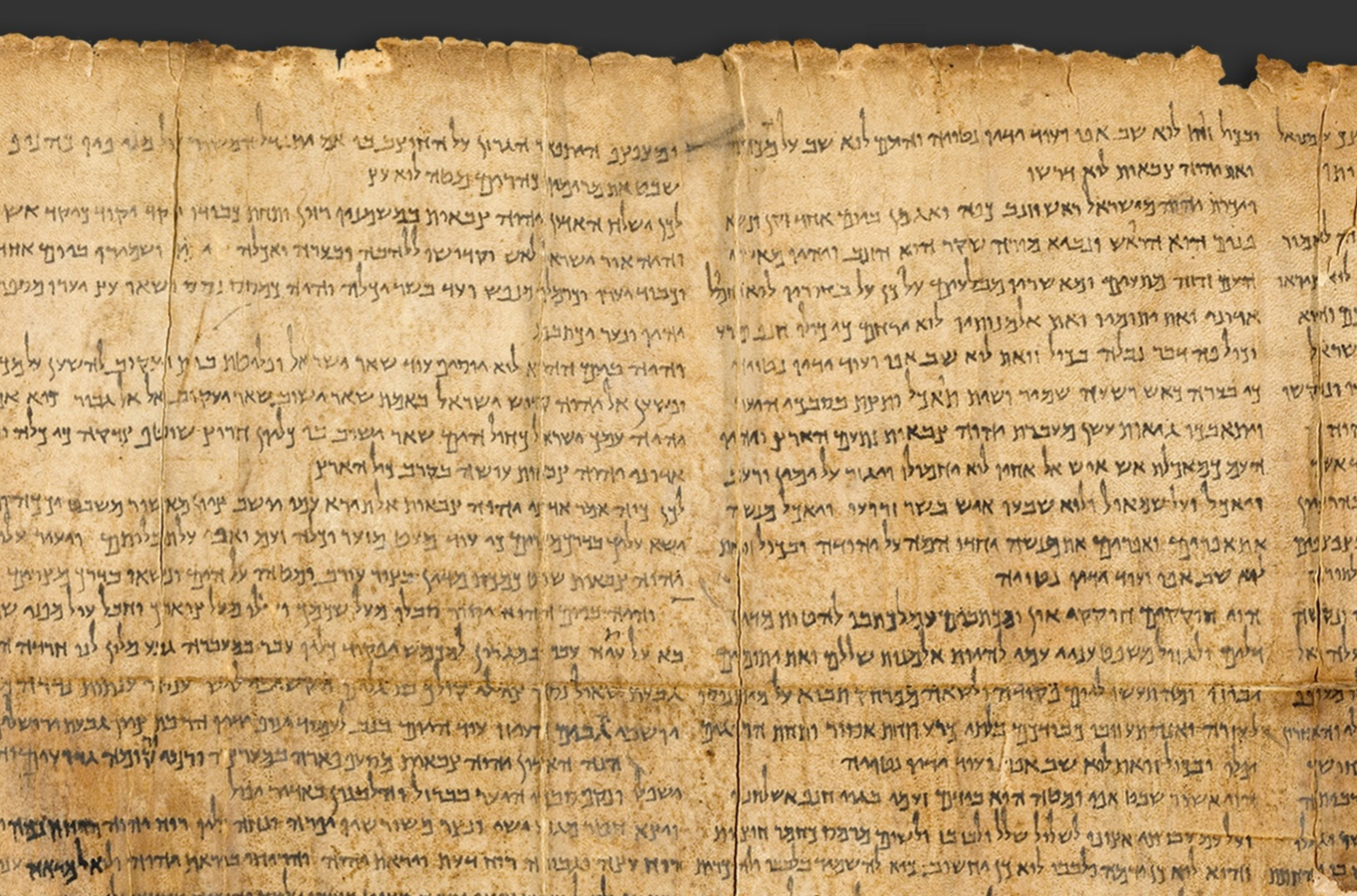
A portion of the Dead Sea Scrolls
The Dead Sea Scrolls answer a somewhat different question. They do not primarily confirm events. They allow us to compare biblical manuscripts separated by many centuries.
The Great Isaiah Scroll, dated by the Israel Museum to approximately 125 BC, contains all sixty-six chapters of the Hebrew form of Isaiah. It is roughly a thousand years older than the principal medieval Hebrew manuscripts that were available before the Qumran discoveries. The Israel Museum states that its text is generally in agreement with the traditional Masoretic version while naturally containing variant readings, spelling differences and scribal corrections.
The scrolls therefore do not prove inspiration. What they decisively refute is the simplistic notion that the text of the Old Testament was freely invented or rewritten beyond recognition during the medieval period.
The Shroud of Turin
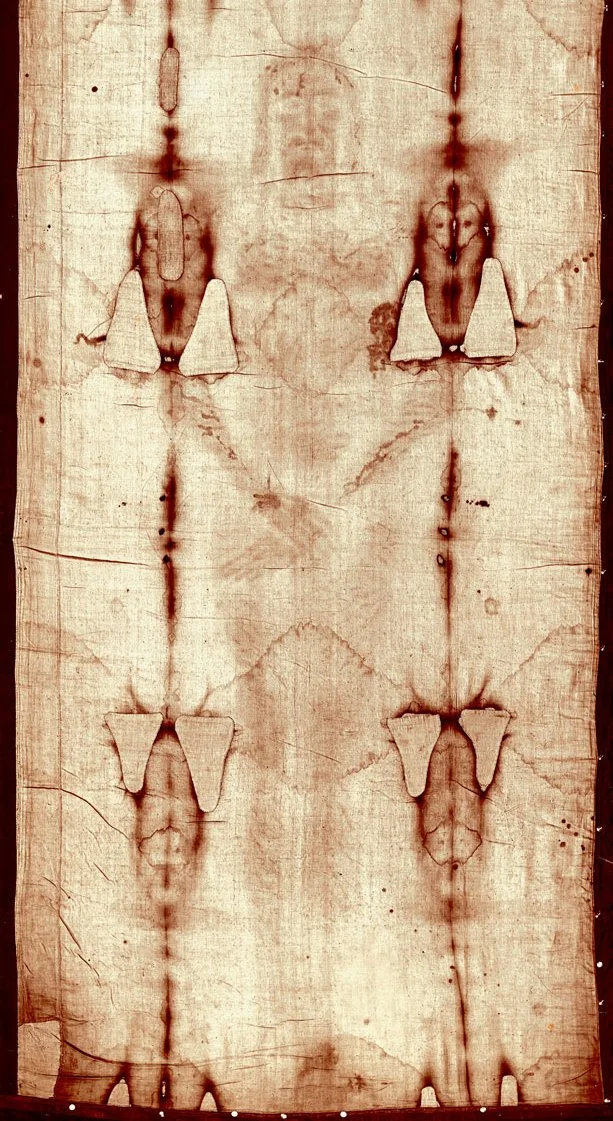
The Shroud of Turin
The Shroud deserves inclusion in the Christian evidential case, although strictly speaking it is better described as historical, textile, forensic and scientific evidence rather than ordinary biblical archaeology.
It is a linen cloth approximately 4.3 metres long bearing faint front-and-back images of a man who appears to have undergone severe trauma consistent with crucifixion.
The question is extraordinary:
Could this actually be the burial cloth in which the body of Jesus Christ was wrapped?
What Scientific Investigation Has Established
The 1978 Shroud of Turin Research Project—STURP—conducted extensive physical and chemical examinations.
A major peer-reviewed summary published by L. A. Schwalbe and R. N. Rogers in Analytica Chimica Acta concluded that the body image was associated with oxidation and dehydration of the linen cellulose rather than an ordinary applied pigment; the researchers reported no single proposed image-formation mechanism that adequately explained all observations. They also concluded that the wound areas examined were bloodstains. (ScienceDirect)
J. H. Heller and A. D. Adler independently reported in Applied Optics that spectroscopic and chemical testing identified blood in the alleged blood areas. (PubMed)
John Jackson, Eric Jumper and William Ercoline subsequently demonstrated a correlation between Shroud image intensity and three-dimensional characteristics of a human body shape. This unusual spatial information distinguishes the image from an ordinary photograph or conventional painted representation. (Optica Publishing Group)
Experiments published in Applied Optics in 2012 also demonstrated that short ultraviolet laser pulses could produce certain extremely superficial Shroud-like coloration effects on linen. That does not prove that radiation created the Shroud, still less that radiation emitted at the Resurrection did so. It merely demonstrates experimentally that some unusual features of the image can be reproduced by a particular photochemical mechanism. (Optica Publishing Group)
The Major Objection: The 1988 Radiocarbon Date
Any responsible defence of the Shroud must confront the strongest evidence against authenticity.
In 1988, laboratories at Arizona, Oxford and Zürich radiocarbon-dated samples from the cloth. Their joint paper, published in Nature in 1989, reported a calibrated range of AD 1260–1390 and described this as evidence of a medieval origin. (Nature)
That result cannot simply be waved away.
Later researchers did, however, identify statistical problems. A 2019 study in Archaeometry, based on previously unavailable raw measurements, reported significant lack of homogeneity and argued that the procedure should be reconsidered. A 2020 statistical analysis likewise reported inter-laboratory heterogeneity and a spatial trend in the measurements and concluded that the 1988 results did not satisfy contemporary accuracy requirements. Neither study established a first-century date; both questioned whether the 1988 dataset warrants the degree of certainty originally claimed. (Wiley Online Library)
A separate 2022 study employed wide-angle X-ray scattering to measure degradation of Shroud linen fibres. Under the authors' assumptions regarding temperature and humidity history, their results were compatible with an approximately two-thousand-year-old textile. This is interesting evidence, but WAXS degradation dating is not equivalent to direct radiocarbon dating and depends significantly upon assumptions about the cloth's environmental history. (MDPI)
The Important 2026 Development
In April 2026, Rachel Freer-Waters and A. J. Timothy Jull published a new examination of two surviving fragments from the University of Arizona's 1988 Shroud sample.
They found that the fragments were consistent with the main Shroud textile and detected no evidence of coatings or contamination capable of supporting the familiar argument that the laboratories had simply dated an unrelated medieval repair. The authors continue to support the original medieval radiocarbon result. (Nature)
This materially affects how the pro-authenticity case should be presented. It is no longer sound to tell readers confidently that “the carbon dating has been disproved because the laboratories dated a medieval repair.” The evidence is more complicated.
There remain legitimate questions about statistical heterogeneity and whether one corner can represent the entire cloth, and alternative dating methods have produced older estimates. But the 2026 analysis weakens one of the most popular explanations for rejecting the 1988 result.
What Does the Shroud Prove?
It does not scientifically prove the Resurrection. Science can investigate fibres, blood, image properties, chemistry and chronology. It cannot repeat or experimentally observe a unique supernatural event two thousand years ago.
Nevertheless, several facts remain remarkable: the cloth bears the image of a genuinely tortured and crucified man; the wound areas contain blood; the image is not readily reducible to conventional painting; it contains unusual spatial information; and its complete formation mechanism remains disputed.
If the textile were eventually established to originate in first-century Judaea, the correspondence with the Gospel Passion would become extraordinarily significant.
At present the proper conclusion is more restrained:
the Shroud is serious evidence worthy of investigation, but its identification as the burial cloth of Jesus remains an historical and scientific question rather than a defined Catholic doctrine or demonstrated archaeological fact.
The Main Objection
“This Only Proves That Some People and Places in the Bible Existed”
This is the strongest reasonable objection.
Finding Pontius Pilate's name does not prove that Pilate condemned Jesus. Finding Bethesda does not prove that Christ healed a paralytic there. Finding evidence of crucifixion does not prove the Resurrection. Finding the House of David does not establish every event attributed to David.
That is correct. Archaeology does not prove Christianity by itself.
Response
The argument is cumulative, not simplistic.
Suppose an ancient document claims to describe events in a particular city and period. We discover that it correctly knows the rulers, governmental titles, neighbouring kingdoms, military invasions, architectural features, water systems, burial customs and local geography. Some of those details were later lost and became recoverable only through excavation.
None individually proves every sentence in the document.
But collectively they matter greatly when assessing whether the author was writing history grounded in the real world or constructing religious fantasy centuries removed from the events.
This is particularly significant for St John's Gospel. An author who knows the unusual five-portico configuration of Bethesda, the location and function of Jerusalem's pools and the details of Judaean geography is writing with considerable knowledge of the setting in which he places Christ.
Archaeology therefore serves the same role that external corroboration serves in ordinary historical investigation. It tests aspects of a narrative which can independently be tested.
The supernatural claims must then be investigated by historical testimony appropriate to them. That is why the next stages in the case for Christianity concern Christ's miracles, His claims about Himself, His Crucifixion and especially His Resurrection.
What We Can and Cannot Conclude
Established Catholic doctrine: Sacred Scripture is divinely inspired and cannot be treated by Catholics as merely fallible religious mythology. Pre–Vatican II Catholic teaching explicitly encourages serious use of history, archaeology, philology and related sciences in understanding and defending the biblical text. (Vatican)
Established historical and archaeological facts: There are ancient extrabiblical references to Israel and the House of David; the Mesha Stele attests conflict between Moab and Israel; Assyrian records name Hezekiah and document Sennacherib's campaign in Judah; the Lachish reliefs depict that campaign; Hezekiah's water system belongs to the appropriate period; Pontius Pilate is archaeologically attested; first-century Jerusalem contained architectural features closely corresponding to Gospel descriptions; and archaeology has produced direct physical evidence of Roman crucifixion in Judaea. (Museum of the Bible)
Strong historical conclusion: The cumulative archaeological evidence demonstrates that the biblical writings are deeply embedded in the authentic political, geographical and cultural world they purport to describe. This considerably strengthens their credibility as historical sources.
Disputed historical questions: The precise identification of some archaeological sites remains debated; the Caiaphas ossuary identification, though strong and widely accepted, is an historical identification rather than an explicit statement about Jesus; and archaeology continues to debate many aspects of Israelite chronology, the Exodus period and particular sites.
The Shroud of Turin: Its physical properties, blood evidence and unusual image characteristics are established areas of scientific study. Its identification as Jesus Christ's actual burial cloth remains disputed. The medieval radiocarbon result is serious evidence against authenticity, while subsequent statistical and physical investigations keep aspects of the question open. (ScienceDirect)
What archaeology cannot establish: Archaeology cannot excavate the Incarnation, photograph the moment of Resurrection or prove grace, divine inspiration or Christ's divinity merely by discovering an inscription.
What is not necessary to the argument: The historical credibility of Scripture does not depend upon disputed claims about Noah's Ark, Red Sea chariot wheels, the exact location of Mount Sinai, or any single controversial artefact. The evidential case is already substantial without them.
Conclusion
Archaeology does not prove Christianity in the simplistic sense of finding an artefact inscribed “the Bible is true.” Its contribution is more serious.
Across centuries of biblical history, inscriptions, monuments, cities, waterworks, burial remains and administrative records repeatedly intersect with the world described in Scripture. Israel appears in an Egyptian royal inscription. The House of David appears on an Aramaean victory monument. Mesha speaks from Moab. Sennacherib names Hezekiah and commemorates his invasion of Judah. His palace walls display the fall of Lachish. Hezekiah's waterworks remain beneath Jerusalem. Pontius Pilate's name survives in Latin stone. First-century Jerusalem yields architectural structures that illuminate details in St John's Gospel.
Those are not theological assertions produced by the Church. They are pieces of material history.
The Shroud of Turin potentially brings the material question even closer to Christ Himself, but its evidence must be presented with appropriate caution. It is a remarkable and still-contested object—not a substitute for the historical evidence for the Resurrection.
The cumulative archaeological case therefore does something important. It establishes that the Bible is not floating in a world of religious fantasy. Again and again, its narratives touch the recoverable history of the ancient world.
That prepares the reader for the more important question.
If the Evangelists knew the world in which Jesus lived, what should we make of what they say He actually did—and who He claimed to be?
Primary Sources
Sacred Scripture — Douay-Rheims, Luke 1:1–4; 2 Kings 18–20; 2 Chronicles 32; John 5; John 9.
Luke 1:1–4
2 Kings 20:20
2 Chronicles 32:30
Pope Leo XIII, Providentissimus Deus, 18 November 1893, especially §§17, 20, 23 on historical investigation, the trustworthiness of the sacred records and apparent conflicts with archaeology.
Providentissimus Deus — Vatican archive
Pope Pius XII, Divino Afflante Spiritu, 30 September 1943, especially §§32, 38–44 on archaeology, history, literary forms and biblical historicity.
Divino Afflante Spiritu — Vatican archive
Tel Dan Stele, ninth century BC, Israel Antiquities Authority / Israel Museum collection.
Tel Dan Stele — Jewish Museum / Israel Museum presentation
Mesha Stele, ninth century BC, Louvre, AO 5066.
Mesha Stele — Louvre Collections
Sennacherib/Taylor Prism, British Museum 91032, 691 BC.
Taylor Prism — British Museum
Lachish reliefs, palace of Sennacherib, British Museum.
Assyria: Siege of Lachish — British Museum
Frumkin, Amos; Shimron, Aryeh; Rosenbaum, Jeff, “Radiometric dating of the Siloam Tunnel, Jerusalem,” Nature 425 (2003), 169–171.
Nature — Radiometric dating of the Siloam Tunnel
Israel Museum, “The Cradle of Christianity,” archaeological presentation of the Pilate inscription and Caiaphas ossuary.
Israel Museum — The Cradle of Christianity
Israel Museum, Great Isaiah Scroll, Digital Dead Sea Scrolls.
Great Isaiah Scroll — Israel Museum
Heller, J. H. and Adler, A. D., “Blood on the Shroud of Turin,” Applied Optics 19 (1980), 2742–2744.
PubMed record — Blood on the Shroud of Turin
Schwalbe, L. A. and Rogers, R. N., “Physics and chemistry of the Shroud of Turin: A summary of the 1978 investigation,” Analytica Chimica Acta 135 (1982), 3–49.
1978 Shroud investigation — journal record
Jackson, John P.; Jumper, Eric J.; Ercoline, William R., “Correlation of image intensity on the Turin Shroud with the 3-D structure of a human body shape,” Applied Optics 23 (1984), 2244–2270.
Applied Optics — three-dimensional Shroud study
Damon, P. E. et al., “Radiocarbon dating of the Shroud of Turin,” Nature 337 (1989), 611–615.
Original 1989 radiocarbon study
Freer-Waters, Rachel and Jull, A. J. Timothy, “Analysis of textile fragments from the 1988 radiocarbon samples of the Turin Shroud,” npj Heritage Science 14 (2026), article 263.
2026 examination of Shroud radiocarbon fragments
Further Reading
Casabianca, Tristan et al., “Radiocarbon Dating of the Turin Shroud: New Evidence from Raw Data,” Archaeometry 61 (2019).
Archaeometry — Shroud radiocarbon raw-data analysis
Riani et al., “Statistical and Proactive Analysis of an Inter-Laboratory Comparison: The Radiocarbon Dating of the Shroud of Turin,” Entropy 22 (2020).
Full open-access statistical analysis
De Caro, Liberato et al., “X-ray Dating of a Turin Shroud's Linen Sample,” Heritage 5 (2022), 860–870.
2022 WAXS linen dating study
Reich, Ronny and Shukron, Eli, “The Pool of Siloam in Jerusalem of the Late Second Temple Period and Its Surroundings,” in Unearthing Jerusalem: 150 Years of Archaeological Research in the Holy City (2011), pp. 241–256.
Academic study of the Pool of Siloam
George van Kooten, “The Pre-70 CE Dating of the Gospel of John: ‘There is in Jerusalem … a pool … which has five porticoes’,” New Testament Studies 71 (2025), 29–55.
Cambridge University Press — Bethesda and John 5:2
Related Questions
Did Jesus Christ Really Exist?
Are the Gospels Historically Reliable?
Who Did Jesus Christ Claim to Be?
Did Jesus Christ Really Perform Miracles?
Did Jesus Christ Really Rise from the Dead?
Is the Shroud of Turin the Burial Cloth of Jesus Christ?
Is Jesus Christ Truly God?
Why Believe the Bible Is the Word of God?